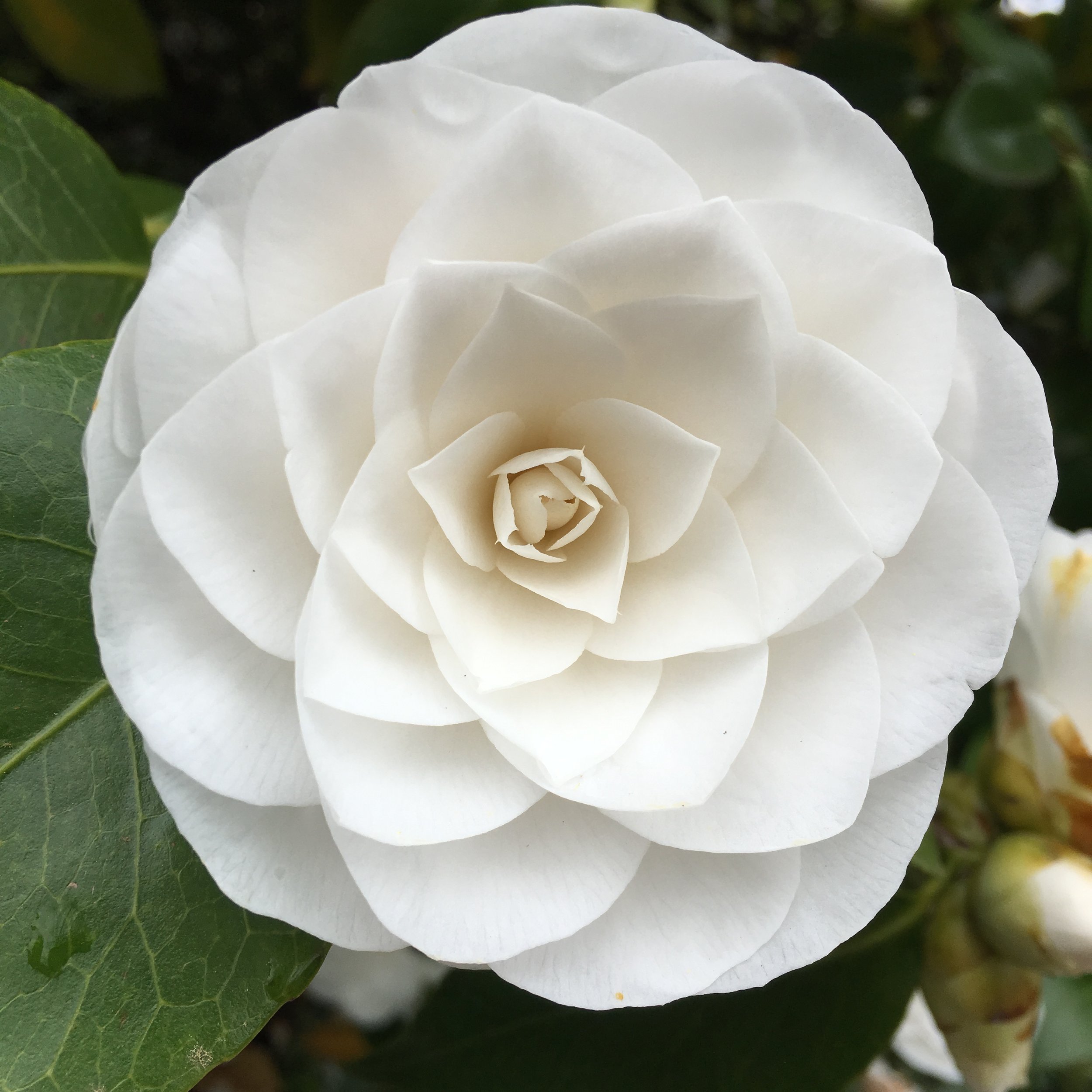
Life as Continuity
What are the things that connect us?
I’m currently contributing to a project aimed to prepare students who are considering chiropractic college. Working on the Philosophy section has given me another opportunity to review the tools and terms, but more importantly, the Big Picture. What is the WHY that informs the practitioner? How does the body work? How does directing focus on promoting and advancing health (instead of prevention and treatment of disease) impact how someone experiences their body and the world?
As one of the things that connect us, language is so important. I used to think of myself as a student of the Anatomy of Wellbeing, until I made the connection that the word “anatomy” (to cut up) itself implies an orientation to separating things into pieces. This can be a useful process and often helps us understand things with more detail. However, without an appreciation for the context of the whole and the recognition that in life things are not separate, the process of reducing can lead to division in mind and heart.
Within the realm of the human body, everything is connected. Traditionally, we have been taught that muscles attach to bones via tendons. We can “dissect” these “pieces” out, see the nerves and blood vessels that feed them, and describe what actions they perform. This is what tradition has passed down - a tradition informed by reductionism. What if we approached the body from the perspective of continuity? There is a seamless continuity within and through the entire body. I mean this literally. There are no seams, stitches, or pins in healthy tissue. The connective tissue of fascia wraps, folds, and weaves together all tissue in the body. The nervous system coordinates and communicates directly or indirectly with all parts of the body. The second a knife - a surgical one or a mental one - is applied it introduces a break in this continuity. This is not necessarily a bad thing, as long as it acknowledges and honors the natural whole state of the body.
How can this sense of continuity inform other aspects of life? If we begin with the perspective that everything is connected - and in some way or another continuous - we realize the tremendous responsibility we have to ourselves, each other and the planet. Nothing and no one exists in isolation. Your wellbeing is my wellbeing. How we treat the environment reflects how we treat our own bodies. We’re in this together. This is the Big Picture.
From the Wisdom of Pine Cones
Along the southern reaches of the Jersey shore, maritime forests of pine and oak grow strong in the sandy soil. Owing to the influence of fire and humanity, the predominant species here is pitch pine (Pinus rigida). The cones of this tree have adapted so that they will open only in response to extreme heat. The natural, necessary, and repetitive process of wildfire both destroys and renews the resources of this land.
At the close of 2018, I returned once again to the forests and the land where I grew as a sapling. The opportunity to spend time with my family, to revisit the well-trod paths of my youth, to hold congress with my favorite groves, and to feel the the brisk south wind along the shore, as always, was beautiful and insightful. So much has changed, yet roots remember.
If left undisturbed, clearings made by fire or people in the forest will become wooded again. In ecology, the process of succession is a slow, orderly sequence of changes in which one community of plants and animals will replace each previous community until a climax community emerges. In the Pine Barrens it takes 100-200 years for an open field to become a mature forest.
And eventually it will burn.
The pre-Socratic philosopher Heraclitus related the kosmos to “an everliving fire; kindling in measures and being quenched in measures”. The world, like the beings that inhabit it, is constantly in a state of flux. “Changing, they stay the same”.
In my own life, especially in 2018, the sequence of changes I experienced did not seem slow or orderly. It became apparent to me that sometimes we, too, are exposed to the rapid and wild fire of transformation. In time, the flora and fauna of our inner and outer Erlebnis will change, creating and being created by the emerging landscape of Life. In his meditation on trees, Herman Hesse channels:
”A tree says: A kernel is hidden in me, a spark, a thought, I am life from eternal life...I was made to form and reveal the eternal in my smallest special detail”.
As with trees, we have an elemental contract with earth and water, to breathe the air and to be tempered by fire. Like the pitch pine, a new cycle begins with a kernel in ash and ember. May you kindle abundance in this new year.
Bonus Time
In 1905, the shipbuilder and former mayor of Seattle, Robert Moran, was told by doctors he had about one year to live. He was 47.
Moran had recently completed the project that would crown his shipbuilding career, the battleship USS Nebraska. His rise to fame and success was not ordained. He was only 18 years old when he arrived in Seattle, which was, at the time, a very small and recently incorporated outpost. He had left his family and his home in New York City and landed on the other side of the country with barely a penny to his name. He worked on steamboats, saving enough to eventually pay for his mother and siblings to come join him. With his three brothers, he established a ship-repair business that grew and prospered. He was elected mayor of Seattle in 1888 and because of his efforts to coordinate the rebuilding of the city following the Great Seattle Fire of 1889, he was re-elected to a second term. The fire had devastated the business district, including his own company. He spent the next 15 years growing his business, which thrived and culminated with the completion of the naval contract the Nebraska.
Issues with his health led him to seek medical care, and he was diagnosed with "organic heart disease". Hans Selye would not begin his research into the general adaptation syndrome until 1936. Moran had what would now be considered a case of "executive stress". Regardless of what it was called, both he and his doctors sensed that his health was failing. Robert Moran then did something that changed the trajectory of his life.
He moved to Orcas Island, in the San Juan archipelago west of Seattle, and began construction on a mansion that would be his final project. He left his company in the hands of his brothers and employed his shipwrights to build the home in which he planned to spend the rest of his life. His mansion, which is now the Rosario Resort, looks and feels like it would be able to embark on a journey at sea.
Robert Moran did not die of "organic heart disease" that year. In fact, he lived to be 86. Toward the end of his long life, he donated much of his property to the state of Washington, and constructed the roads, bridges, and look-out tower atop Mt. Constitution with his own resources, looking to ensure the preservation and future enjoyment of the land for public use. Foreseeing the potential strife among his family for his estate, he sold his mansion and nearly all of his possessions to an outside party, again working to preserve the integrity of his legacy.
Why is the story of Robert Moran worth recounting?
What strikes me is that throughout his life, Robert Moran seemed to act as a steward. He amassed great material wealth, yet his actions speak more to a sense that this wealth and these resources were passing through him, not owned by him. As a businessman and public servant, he worked to promote his own interests, but those interests also included the good of those around him.
In addition to stewardship, the story of Moran is a parable of "bonus time." In the case of our shipwright, we can imagine that every day beyond his expected date of expiration could be considered a bonus. His conscious decision to heed the warning signs of his body, to not get trapped in the designs of his ego, and to reorganize how he was living allowed him to live a much longer and much healthier life. Looking out over the San Juan islands, walking in the woods on Orcas, breathing the same air as a family of whales, spending time with loved ones - a chance to pause. Isn’t it all bonus time?
It reminds me of a poem, “The Summer Day” by Mary Oliver, which is perhaps the best medium to consider these things:
Doesn't everything die at last, and too soon?
Tell me, what is it you plan to do
with your one wild and precious life?