Brushwork
How often do you brush your teeth? Once a day? Twice a day? Floss, mouthwash, perhaps a coconut oil pull? It is widely acknowledged that brushing your teeth routinely is an important aspect of dental hygiene. I, however, am not a dentist. I’m not here to critique your teeth.
I do have a particular interest in how the brain works. The brain thrives on novelty. One of the most important elements of learning is based on this concept. Is the brain excited to make sense of some new idea or information that doesn’t fit neatly into what it already recognizes? Brain health depends on constantly learning and learning is stimulated by novelty.
I am using “learning” in a very broad sense. You can learn from books, or from podcasts. You can learn from conversations with interesting people or gain knowledge from an experience, especially if it’s not part of your normal routine. On a biological level, the definition of learning neatly summarizes the major role that the nervous system plays in the body - “the acquisition of knowledge and skills”. In a literal sense, your life depends on the ability of your brain to acquire knowledge and develop skills. The quality of your life also depends on whether and how much you choose to learn.
One of the best ways to introduce novelty to your brain is by adding creativity to your life. You don’t have take painting classes with Bob Ross or consider yourself “the creative type” to make this happen. You do have to acknowledge one very simple, but very profound fact:
being creative is a choice that can be made with every thought, every word, and every action.
Piece by piece, choice by choice, and day by day, you have a chance to create something for yourself, of yourself. Remember, it’s on you: no one is going to live creatively for you.
So start small. Take a different way home, try cooking without a recipe, cross your legs the other way. Read some poetry, tell the truth, or see what happens if you pay attention to your breathing for 10 seconds. Have you ever tried brushing your teeth with the opposite hand?
Brushing your teeth lefty might not change your life overnight, but it’s a start.

Moving Mindfully
Chiropractic recognizes that life is the expression of intelligence through matter. One of the ways we see and experience this is through movement. A major sign of how healthy we are is how well we move.
Movement requires mobility, strength, and endurance. Mobility is the coordinated ability to move through the body’s natural ranges of motion. Mobility is not flexibility. Flexibility shows that joints have some elasticity, but often without the added stability of coordinated and strong movement patterns, which characterize mobility.
Your body responds to what you ask it to do consistently.
Mobility and strength will only happen if you ask your body for them by having a movement practice. Pilates, yoga, walking, swimming, and climbing are great examples of full body movement practices. There are plenty of others.
A movement practice is essential to the health of the body. Chiropractic is essential to the health of the movement practice.
The way that I practice chiropractic is by looking at how well the central communication network of the body (the nervous system) is working. This system underlies and coordinates all function in the body, including movement. Movement is both a sign of and a way to improve overall body health/challenge.
Endurance. Movement happens in time. Over time, both during activity/exercise and sustained periods of suboptimal posture (think: sitting in a chair), muscles fatigue. When it comes to movement, it will always be better to do less repetitions properly than more repetitions with poor form. Reinforcing good form and mechanics will lead to more strength, more endurance, and decreased risk for injury.
Questions to ask about your movement practice:
Do I have the necessary range of motion for this activity/task/exercise/asana?
Do I have the necessary strength to perform this activity/task/exercise/asana correctly?
Am I taking cues from my body about fatigue and how it affects questions 1 and 2?
Answering “no” does not mean you cannot or should not move. It does mean you need to modify what you are asking your body to do in a way that honors your current capabilities. Consistent and intelligent effort will yield results. Listen to your body - move, have fun, be mindful.

Seeds of Change
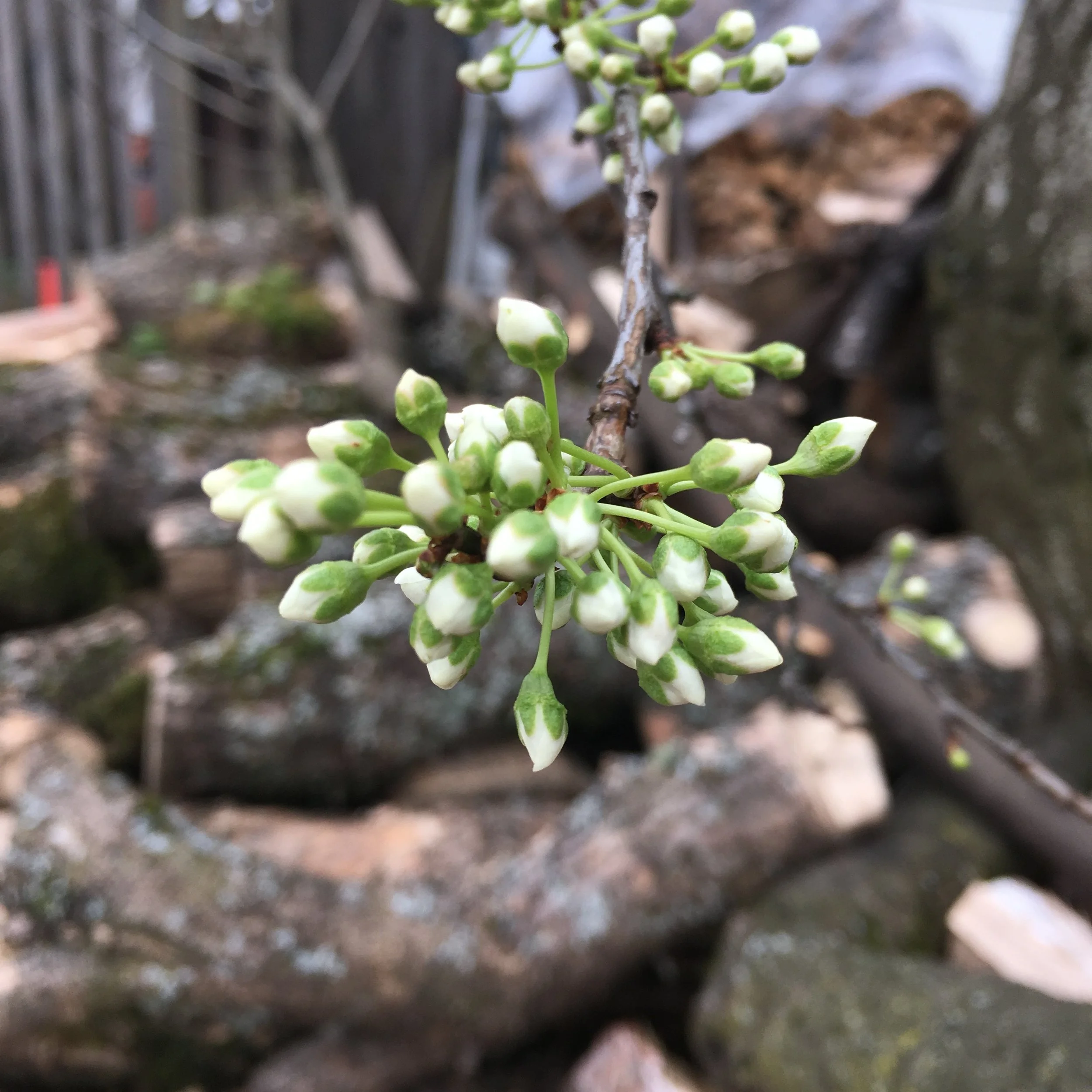
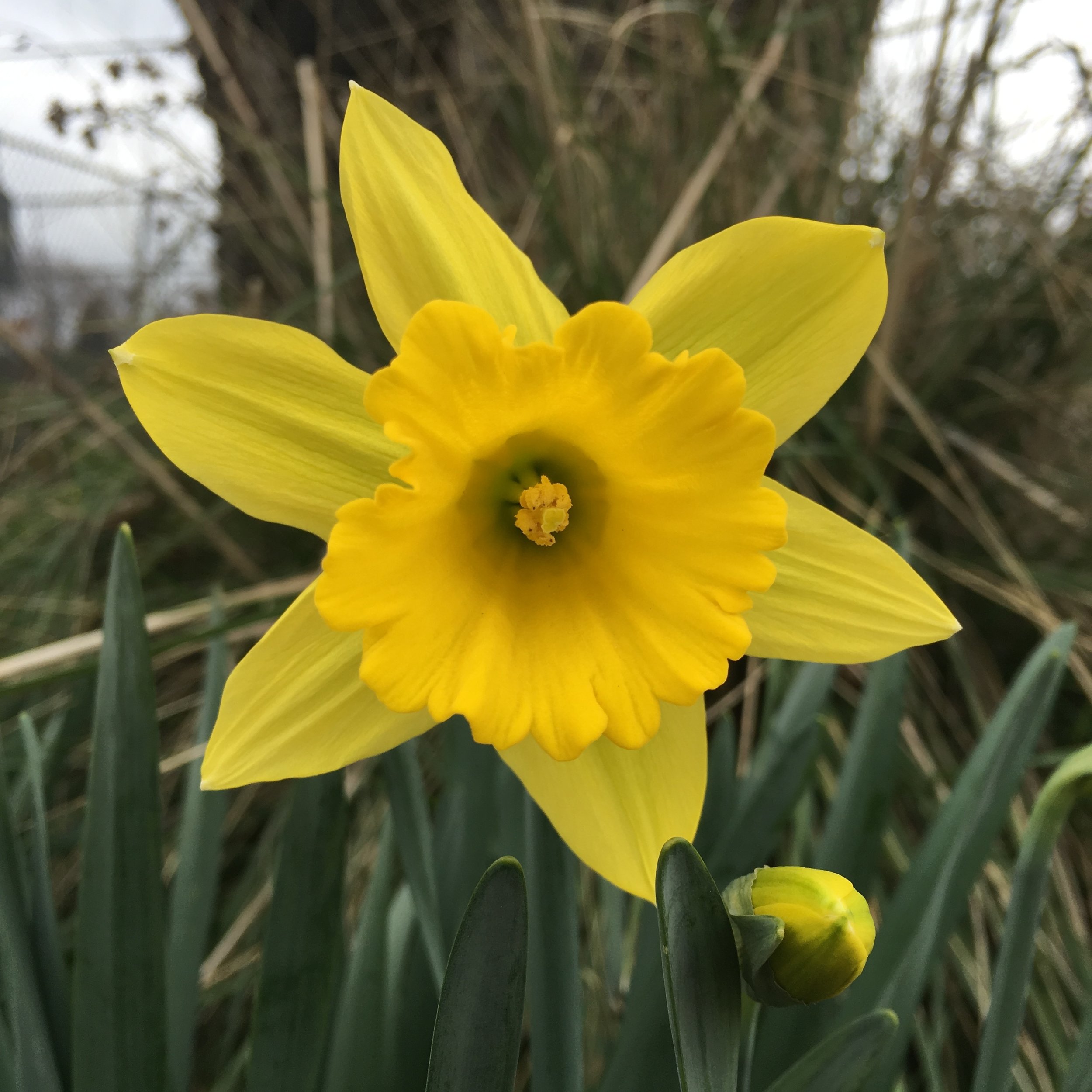
After the worst winter the city has had in a long time, Portland is waking up. Within a week of the vernal equinox, buds are on the trees, flowers are blooming, and color is starting to radiate against the perennial green and grey of Stumptown.
The past 6 months has been an immense period of transition. Both personally and in my practice, every person I know has been presented with a significant challenge in their life during this timeframe. For some it’s about the health of their body. For others it’s a change in relationship, home, job, or family. It has been an opportunity to change perspective, to stand up for what’s right, and to make a choice to let go of that which no longer serves.
Each year Spring reminds us that as long and dark as the winter might have been, it was necessary to cultivate these seeds of change. This is the time to choose which seeds to plant, which ones to water, and which ones we want to see grow.