Avalon
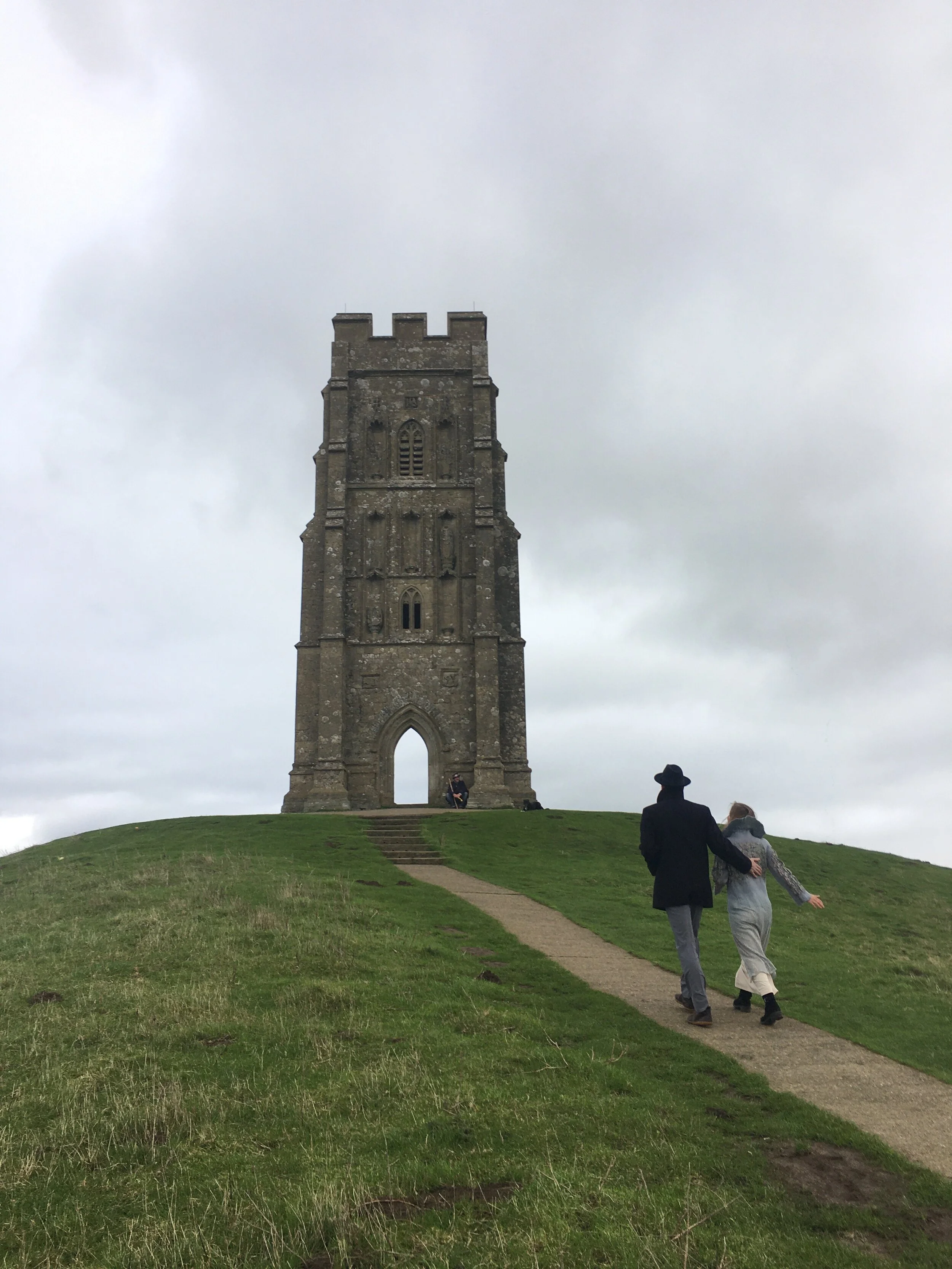
In the Summer country of western England, the Glastonbury Tor rises from the heather green quilt of the plain. An ancient and magnetic place, centuries have carved away the clay and limestone layers of the Tor, but not the sandstone at the top. Glastonbury is said to be the location of Avalon, the legendary lake and island country from which Arthur received his sword Excalibur and to which he was brought after his mortal wounding, where the once and future king heals and waits. Avalon is a land of apples. Indeed, the trees and orchards here draw more than water into their fruit. Two sacred springs - one red, one white - emanate from the base of the Tor. The water from these springs carries the song of the land out of the earth, rich in mineral, and charged with the clarity and potency of centuries of reverence. The red spring is fed from the Chalice Well, so named as it is said to be where Joseph of Arimathea brought and buried the cup from which Jesus drank at the Last Supper.
On November 2nd, my partner, Adria, and I met at the Chalice Well to bless the rings we would offer each other in the ceremony of our union. From the Well we walked to the Red Spring, to the White Spring, and then to the Tor. One of our guides, aptly named Tor, led us through the paired oaks at the base of the hill and then to the entrance of the arcane labyrinth that wreaths the Tor. “This is a place of powerful magic,” he said, “and in choosing this place you make your intention and commitment known to the many realms.” We entered, and began to ascend. As we walked each other toward the top, the sky began to change. Early November sunshine gave way to the elemental grey of the isle. At the top of the Tor stands the remnant of the second church of St. Michael, a bell tower built of sandstone in the 14th century. It was within the walls of the this tower that we held our ceremony.
Our other guide, Kristen, priestess and student of the stars, began with an acknowledgement of our journey and the influence of the heavens. She fastened our hands with a ribbon, which had held three circled and interlinked willow branches, gifted by the Tor on the way up. As the wind blew through and around us, we exchanged our vows and our rings. With hands fastened, we drank the cider of Avalonian apples from a crystal chalice. Our guide Tor followed with the slicing of an apple, longitudinally to reveal not only the heart-shape the core makes in cross-section, but the representation of the dagger (stem) and the chalice (fruit). He sliced the apple again, transversely, revealing the arrangement of the seeds as a five-pointed star. We shared the apple, and offered it to the four directions. Into his conch shell he blew a sound into the wind pronouncing and proclaiming our marriage across the land.
A light rain began to fall as we descended back down the Tor. Through the labyrinth again, taking care to exit with as much intention as we entered. At the sentinel oaks at the base of the hill, we took time to reflect before stepping through the gate. Once again in the mortal world, we continue to walk each other onward home.


What Gets Baked In?
Since the beginning of this year, I have begun some kitchen experiments - what some might refer to as “baking”. Usually on a weekend, I will raid the pantry and/or fridge to see what ingredients are available to transform from shelf powder to home-baked pastry. There are recipes, general guidelines, and traditional wisdom passed down from current and bygone bakers, but reading about scones and digging into the trenches of butter and flour are two very different experiences.
Baking is a simple and elegant example of emergence. An emergent property is one that an entity displays in its wholeness, that is not present in any of the individual parts that comprise it. For example, butter and flour and sugar by themselves have certain textures and tastes, but none of them can be said to be a biscuit. It is not until they combine with thoughtful ratio and exposure to fire that the alchemy of emergence brings about a new form - one that is more complex than the sum of the parts.
Baking has also reiterated for me how profound a subtle gesture can be. In the kitchen, like in life, things rarely proceed the way the recipe dictates. The ability to adapt to a changing environment is important. Sometimes, a “minor” substitution can yield a major shift in the way the experience unfolds.
Take milk, for instance. For my recent batch of biscuits, I realized there was no milk in the house well after the process was underway. Instead, I substituted Bulgarian yogurt for milk because that was what was available. The baking continued and eventually the golden treats were drawn from the oven. The biscuits were slightly chewier than usual. Not long after the first bite, the eminent critic weighed in. He proceeded to observe that this batch was “not as good. Not like normal.” In other words, these biscuits did not meet an arbitrary and preconceived notion of perfection.
But what about how they browned more evenly and the outer crust was richer? What about the witness who could take a moment to appreciate that I can spend a Sunday morning baking something (anything!) for the sheer pleasure of it? It gave me a chance to reflect on how much I/we miss in the ceaseless quest to judge and criticize instead of simply seeing what is right in front of us. Simple in its truth, yet sometimes rather challenging in practice. This process does not happen in isolation and I enjoy the good fortune to have a partner who encourages me to see this way, who reminds me when I seem to forget, and who patiently supports my adventures in baking.
Another “minor” substitution I have been experimenting with is reframing the question my mind asks about many of the things it considers. The shift from “what if…” to “what is…” may only reflect a single letter substitution in the ingredient phrase, but it yields a much different and much richer Present when it comes out of the oven.
As we enter the heat and the fire of this summer season, I am curious to ask: what is getting baked in? And how does the art and manner of how we bake impact what emerges?


A World Below
In the dark rich earth there is a world that often gets overlooked, trodden down, and covered up.
On an early Spring weekend in Portland, I had the good fortune of fine weather to begin excavating the backyard on a piece of dirt that will make a fine garden. Covered in leaves, weeds, and crab grass, what was once an ordered and tended plot of land had been turned by the hands of time into a neglected space. Nature was reclaiming that which no longer held human attention, and rightly so.
With trowel, spade, shovel, and rake the work of uncovering began. With machines powered by dinosaur remains, edges were drawn and a patch of earth was tilled. Across this not-so-vast territory it is easy to observe small animals - birds, squirrels, an occasional cat, and the lion/fox/bear/sometimes-dog Mack traverse and explore. But unless you dig down, and pay attention to what comes up, you would never see the entrance to the world below. Spiders, slugs, snails, worms, and ants infuse the soil. They create their own highways and byways, establishing an ancient symbiosis with the roots and the plants that grow out of the earth. Harder to see but just as important are the relationships of fungi with the rhizosphere root networks that inform the ecosystem from the ground up.
It is beautifully simple and wonderfully complex at the same time: everything is connected.
Taking account of how much life exists in some handfuls of dirt was a great reminder about how woven the wellbeing of the water, the soil, and the inhabitants of earth are. Spending time with the soil made it clear to me that it is not possible to spray chemicals of any kind, especially those that kill “weeds” without devastating consequences to the entire chain. One telling example worth mentioning is the decline of the western Monarch butterfly, whose population has been estimated to be 99% reduced since the 1980s.
BJ Palmer, the developer of chiropractic, made note of the potential for impact we can have with our thoughts, words, and actions. I intend to use mine well.