
Good Fortune
Every once in a while, a fortune cookie offers true wisdom.
Nearly two years ago, when visiting Seattle on my initial reconnaissance mission to the Pacific Northwest, I had dinner with two friends, one from high school and one from college. At the end of the meal, some fortune cookies were passed around and we all cracked them open. Fortune cookie fortunes contain all manner of messages, some generic, some insightful, some funny, and some absolutely nonsensical.
On this particular occasion, I was gifted with yet another sign that I was on the right course. It read,
Getting together with old friends brings new adventures.
I held on to that fortune for nearly two years, waiting for the right time to pass it along. This past weekend I was fortunate enough to have the sense and the resources to travel back to the East coast to attend the wedding of my good friend. I presented the fortune to his best man, our mutual best friend. It was a small token, but oftentimes the simplest things are the most profound, and the most important.

In Tune
“Life is the expression of tone. In that sentence is the basic principle of Chiropractic.”
More than 100 years ago, D.D. Palmer, the founder of Chiropractic, drew a connection between the state of the nervous system and the health of a person. He defined tone as "the normal degree of nerve tension."
All living tissues (and organs and organisms) have tone. It is a quality that can be perceived and felt, and through specific types of biometrics, can be measured. When tone is normal, the function of the tissues and organs is normal, and this is the primary marker for healthy physiology.
The nervous system is what allows us to perceive and respond to the world around us and to coordinate how the body moves, feels, and heals. When there is tension on the nervous system, it is reflected in the other tissues of the body. Since the spine is intimately related with the spinal cord and brainstem, and serves as the communication highway between the brain and the body, nerve tension often shows up in the spine.
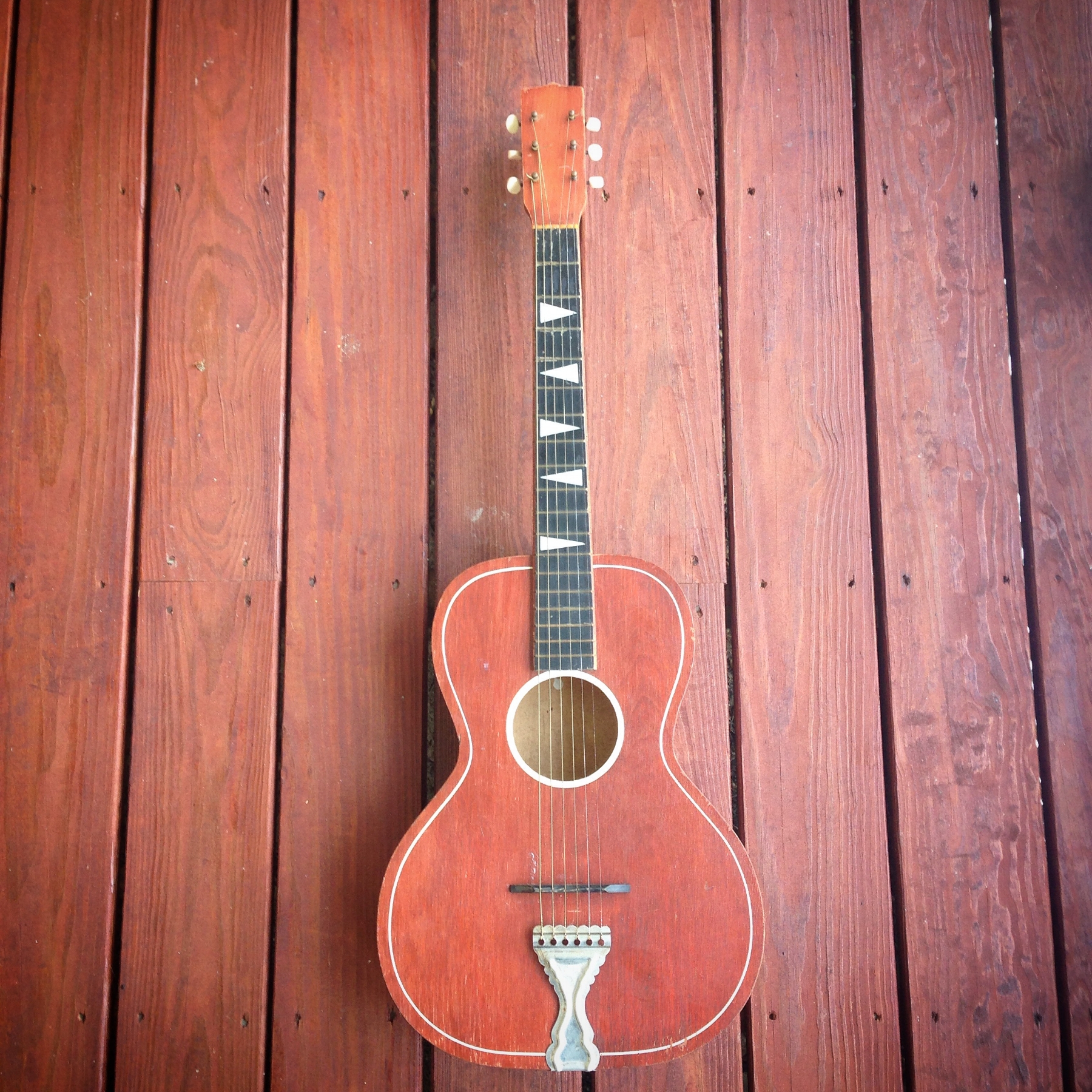
Tone can also be seen as an acoustic phenomenon. A stringed instrument, when in tune, requires the strings to exist at certain tension. When energy is added to the strings to make them move, they oscillate within a specific range of frequencies, and the sound is amplified by the body of the instrument. The ability to express the song, to do so with ease, and for there to be harmony in the process requires both structural alignment and tonal refinement.
When the instrument of the human body is not "in tune," it is because tone is not being expressed normally. In Chiropractic, this is referred to as dis-ease. An attuned nervous system is an adaptive nervous system, and one that allows for health, vitality, and empowerment. This is the basic principle. This is what Chiropractic is founded upon.
Slow It Down
In his first summer in the Sierra, John Muir was hired to help shepherd a flock of sheep up into the mountains. He mused about the rocks and the trees, the clouds, and the majesty of Yosemite.
There are many reasons I enjoy reading Muir, but perhaps more than anything else, it is because he serves to remind me of pace. More specifically, to slow...it...down.
A slower pace allows us to draw focus to the present, to identify certain patterns and habits that are done unconsciously, and to highlight areas of strength or deficit. I believe this applies across all spectra - everything from clinical practice, to yoga, to a walk in the woods.
It can be challenging to be more deliberate in thought and action. There is often an inverse relationship between doing things well and doing them quickly. This does not mean we need to become like the tortoise all of the time (although there is case to be made for why he wins), but rather to practice taking a page out of John Muir’s book once in a while:
"Life seems neither long nor short, and we take no more heed to save time or make haste than do the trees and stars. This is true freedom, a good practical sort of immortality."
